Five Islands From Five Seas
Islands, which have often been the subject of literature and cinema and have been the foundation of utopian theories throughout histo- ry, are the most productive providers of summer tourism services. No one wants to stay on a deserted island for the rest of their lives, but the most attractive opportunities for limited periods are also found on the islands. You’re bound to come across one in one of them.
In Campanella’s book The City of the Sun, which an example of the reflection of the Renaissance on the history of thought, a Genovese captain ex- presses the author’s utopian understanding of the state. The captain found ideal living conditions and a management system that met every demand on an imaginary island called Toprabana. Just like Thomas Moore, who three centuries later brought together his utopias on one island.
The appeal of island life is probably due to its associ- ation with breaking away from the ordinary. Perhaps because even a victim of forced residence like Robinson Crusoe was able to create a small paradise on the island he was stranded on, when an island is mentioned, the first thing that comes to mind is pleasant landscapes instead of Dr. Moro. One fact about islands is that life on them is different from that on even the nearest land mass. Therefore, they
offer an excellent opportunity for those who want to experience a different atmosphere when traveling. In this issue, we have selected five islands that reflect the culture and climate of five different seas.
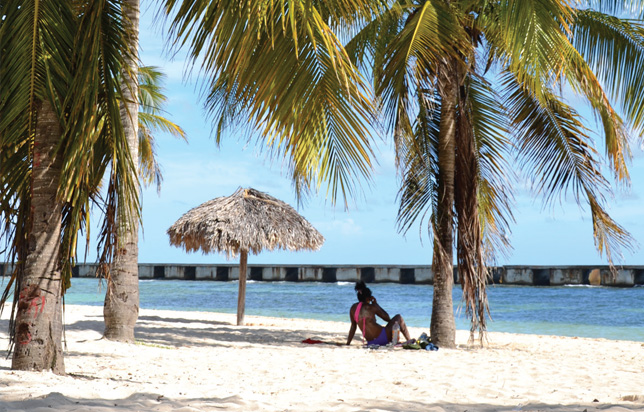
Cayo Levisa in the Caribbean (Cuba)
A tropical island always conjures up positive things in the mind. Adventurous desires bring to mind ocean views, unknown fruits, fancy cocktails, hammock naps, and palm trees shadows accompanied by the setting sun. But is it really so? It’s also possible to end up on an island that’s tropical but filled with mosquitoes that stung, sewage smells, and rotten pineapples. If a person is visiting a tropical island for the first time, they either rely on chance to try their luck or they received reliable advice. This is that kind of advice.
The magnificent Caribbean sea, which seems to be painted in colors that will make it hard to decide whether it is blue or green, and the beaches that you can be sure are white. With only about twenty huts nestled among lush vegetation and palm trees sway- ing over the dreamy sea, Cayo Levisa is a must-see destination for those visiting Cuba. It is sufficient to allocate two days of your stay in Havana and rent a car. Two hours away, Cayo Levisa has a tourist resort completely detached from life, where any seafood is eaten, guitarists are listened to, and meditation requires no special effort, far from luxury and osten- tation. The towns along the way don’t have much special characteristics other than their locality, but you can stop in Pinar del Rio to buy a Havana cigar from its producer. From here, you can take the S. del Rosario road and reach the north coast and pier, 70 km away. Those short on time can choose a shorter and less interesting route of 45 km, heading towards N de Vinales from Havana.
On Cayo Levisa, a tiny island hidden from view but beautiful enough to capture hearts, enthusiasts will discover that the sea below is just as beautiful as the surface. They provide professional equipment, un- derwater guides and boat services for snorkeling or scuba diving. Since it is the only business on the tiny island, it is risky to go without a reservation. You can also make a reservation at the hotel you are staying at in Havana.
Question: What to do in Cayo Levisa?
Answer: Just lie down and relax.
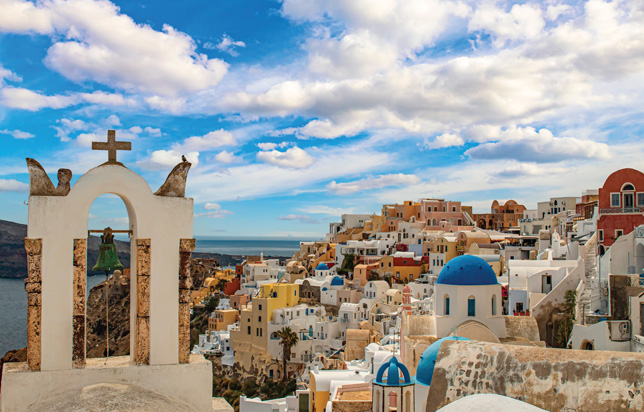
Santorini in the AGEAN SEA (Greece)
Although earthquake activity at the beginning of the year reduced visitors to Santorini, this rate remained around twenty percent. This most popular island of the Cyclades still manages to attract tourists from Europe, and the warm and colorful autumn nights continue. The white paintings created by the un- spoiled local architecture, all the blessings we know well, especially the color of the Aegean Sea, and the breeze that blows even on the hottest days is enough to satisfy what one expects from a vacation.
Transportation in the Aegean islands is provided by sea as well as by plane. Those who want to stop by here while visiting other islands can choose between ferry, sea bus and fishing boat. The larger ferries operate regularly throughout the year. Among the islands, Santorini is one of the ones that leaves almost every visitor satisfied. There is something for every luxury lover, but the island’s characteristic feature is its small family-run guesthouses reflecting Mediterranean aesthetics. Since tourism is the only source of income, it is already impossible to find hostels below certain standards. The islanders’ ap- proach to tourists is very friendly and the prices are very reasonable.
Since Santorini’s city center is located on a volcanic hill, it has little contact with the sea. Those arriving by sea must undertake a challenging stair climb or donkey ride to the top. The central place that adorns all postcards is Fira settlement. Oia is the choice of those who want to stay away from the crowds, where the nightlife is also quite fast. Santorini markets itself as Atlantis. Even though no evidence has been found in this direction, the legend told by Homer as an eyewitness succeeds in attracting tour- ists from all over the world. The historical and cultur- al texture and culinary delights found in almost every corner of the Mediterranean put Santorini one step ahead of other islands. When looking for a place to stay, the best thing to do is to pretend you’re shop- ping and find a special place for yourself among the hotels and hostels lined up one after the other.
Question: What to do in Santorini?
Answer: Rent a motorcycle and explore every nook and cranny.
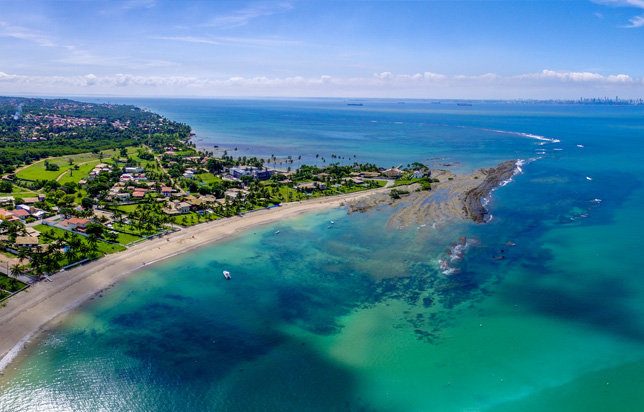
Itaparica in the ATLANTIC OCEAN (Brazil)
Brazil’s ocean coast also has a nature and life whose beauty cannot be compared to any other place. The island of Itaparica, just across from the city of Bahia de Salvador, where Samba and Bossanova were born, is a good example of the many beauties it brings together. It is possible to reach the island from Salvador by ferry or catamaran. There are accom- modation facilities (pousada) of different standards on the island. Located at the entrance to the town of Aratuba, Zimbotropic offers simple, affordable bun- galows nestled in nature. One of the most beautiful Club Meds in the world is also here. There are count- less opportunities to realize your own dreams in a completely different environment with friendly peo- ple, white beaches, delicious seafood and Olodoom music that never leaves your ears.
The strong tides felt along the ocean shores may cause you to be unable to cross the same place in the evening as you did in the morning, but the same natural phenomenon also allows you to collect a wide variety of coral and crustacean remains from the bottom of the water that has receded in the morning. Itaparica is a typical example of the “trop- ical island” concept with its wide beaches and palm forests. Most flights to Brazil from Europe go to Sao Paolo in the south. Like other regions, you need to fly domestically to Salvador. There are direct flights from the USA.
Question: What to do in Itaparica?
Answer: Visit the surrounding villages and Ihla Freda Island, and sunbathe in a hammock when you get tired.
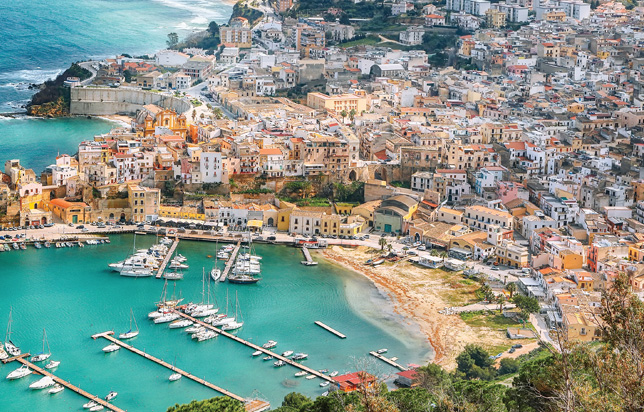
Sicily in the MEDITERRANEAN (Italy)
The island at the tip of the boot is the complete antithesis of northern Italy, with its unique traditions, architecture, enthusiasm and people. Although Sicily first brings to mind the mafia, it is actually the vacation destination of choice for many people living in Italy. The fact that it appeals mostly to the middle class doesn’t make the island in general very attractive, but Cathania and Taormina have features that can attract every traveler. Taormina is not to be missed, with its ancient theater that captivated Wagner, its village perched on the hills like an eagle’s nest, its Paradisio beaches accessible by elevator, and the town of Naxos on the shore. With its magnif- icent old buildings, famous opera and 18th-century architecture, Cathania also holds surprises. The central city of Palermo and the medieval Monreale just above are other places worth seeing on the island.
Those who go to Sicily individually must start their tour in Palermo or Cathania. Palmero is the biggest city. It resembles other Mediterranean capitals in many ways, especially in terms of traffic and crowds. Cathania, on the other hand, makes you feel even more strongly that you are on an Italian island in the Mediterranean. The Etna volcano, a natural wonder, adds a special beauty to the city.
Question: What to do in Sicily?
Answer: Rent a car and tour the whole island.
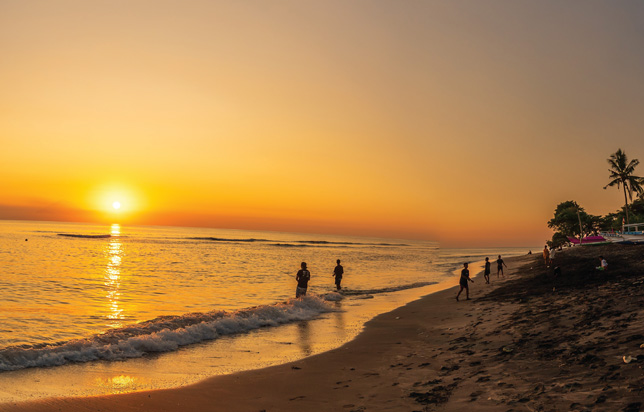
Lombok in the INDIAN OCEAN (Indonesia)
Lombok is Bali’s eastern neighbor. To reach Bali, one has to descend about ten degrees below the Equator. It may not be right to recommend another island to those who haven’t seen Bali, but those who have seen Bali shouldn’t consider themselves to have seen everywhere. Although it is the closest island, Lombok is very different from its famous neighbor. Those who rent minibuses called “bemo” from Bali and go to Padangbai on the east coast of the island, about two hours away, can take a ferry from there. This is the cheapest and most local way of transportation. From Selaparang airport, it is also possible to reach the is- land and Lombok Strict, where the most comfortable chains of large hotels are lined up one after the other.
For those who want to experience the joy of going from one unknown place to another with a bunch of people packed like canned goods, the ferry ride takes five hours. Since Lombok is less touristy than Bali, there is a chance to observe the lifestyle of the locals. Minibuses run along roads stretching between rice and tobacco fields. It cannot be said that the journey with these is very comfortable, but it is a complete traveler experience. Passengers arriving later can sit on the laps of those arriving earlier. The means of transportation further inland are horse-drawn car- riages and motorcycles.
Lombok is very different from all the other islands we have discussed in this article. As you move to- wards the villages in the interior of the island, it is possible to have unique experiences. Once you get deep enough, you might even be the first outsiders to arrive in a village. The fact that fishing is one of the most important sources of income can excite those who are interested in seafood. Nature lovers will also be satisfied when they pass through the waterfalls and reach the monkey forests. Crowded places such as ports and town centres carry the danger of pick- pocketing, so be careful. Lombok is a place for the slightly adventurous tourist.
Question: What to do in Lombok?
Answer: Leave the seashore behind, set out to explore local life and culture in the interior of the island.