At waters that are not the sea
The Great Loop is a waterway that allows boaters to explore Northeast America. This broad course allows sailors to explore the shores of the gulf formed by the Atlantic Ocean, the Great Lakes, Canada’s natural heritage canals, and some of the US rivers. Every sailor who completes the journey is officially recognized as a “Looper.”
Most sailors who sail the 6,000-mile Great Loop route use the Atlantic coast, the Chesapeake Bay, and the New York canals as they navigate the eastern United States and parts of Canada using protected waterways, completing the Great Loop with connections between lakes and rivers.
There are different ways to complete this great loop. For example, a boat sailing from Chicago heads south counterclockwise to take advantage of the Chesapeake Gulf-oriented river currents. Some follow the Mississippi River all the way to the Gulf of Mexico, while others take the Tennessee River to avoid the heavy barge traffic. After all, the Tennessee-Tombigbee waterway also flows into the same gulf, so the first destination is reached.
Whatever the route to the south, the destination is the warm waters of the Gulf of Mexico, and this upstream route also offers the chance to explore the Flower Garden Banks National Marine Sanctuary. Then head east and follow the Intracoastal waterway along the northern shores of the Gulf of Mexico to meet the Florida sun and visit the Florida Keys National Marine Sanctuary.
Those who continue following the ocean shore will have to turn the nose of their boats north after a while. The discovery point on this route will be Gray’s Reef National Marine Sanctuary. New York City can now be marked on the chartplotter. Keep going as you continue sailing north. From the Big Apple, cross the Hudson River and the Erie Canal. It is now in non-marine waters again, and the compass points west. The new destination is the great lakes. The reward for reaching the starting point again via Lake Huron is the Thunder Bay National Marine Sanctuary.

Sailors who have experienced the Great Loop have some common suggestions. One of the most important of these is speed control. The first condition for completing this long route is to allow plenty of time. It is necessary to accept from the beginning that every pre-made program has the possibility of disruption. The program can be disrupted for many reasons, such as weather conditions, fatigue, and breakdowns. The common suggestion of almost every captain is the following romantic sentence: “The biggest danger is being scheduled. Forget the program. Go slowly and take frequent breaks.” Nevertheless, this suggestion should be approached with some caution. After all, sailing requires a plan and to be scheduled. At this point, making three-or four-day plans and providing flexibility in the program should be the best choice. It should not be forgotten to take a vacation in between, also keeping in mind that it is an open-ended journey. After all, the Great Loop is not a race or a rally!
Those who go on this tour talk about travelling in groups, making friends with other boats and stories of solidarity.
Having at least three anchorages in mind for breaks or overnight stays is one of the most common suggestions. It is necessary to make a choice among the alternatives on the spot. So, anyone who intends to meet others along the route and share some stages with different passengers should agree on either the date or the location. Determining both together does not work very well.
As the rivers, lakes, oceans, and natural harbors each have their own weather and water conditions, the interpretation of meteorological data is a matter of real expertise or learning. The weather should always be considered the most important data and should not be risked by frequently changing conditions. Another thing to remember is that this experience was a pleasure. The best medicine against frayed nerves is to spend time exploring and having fun.
Those who are determined to live this experience should buy the Great Loop boat at least a year in advance, start training, learn the rules of the road, and practice as much as possible. In non-marine waters, it is required to have other captaining skills and to handle the boat very sensitively. Since not every necessity can be met at any time in this vast geographical area, it is important to anticipate possible problems in advance and to take precautions for spare parts and tools. If possible, having knowledgeable and skilled people on the crew can also make life easier.
Those who go on this tour talk about traveling in groups, making friends with other boats, and solidarity. Standing in line to find an anchorage is also an important part of the experience. The Nebo Boating mobile app is recommended for local information that sailors may need, but as always, the primary source of learning is locals and boaters who have been here before.
As the Great Loop is a route that combines both fresh and saltwater experiences, it is a school for sailors who are not used to either one. During the tour, vehicles such as boats, canoes, and bicycles can be used quite functionally to satisfy the feelings of discovery and adventure. Among the things to have on board are at least a three-day food stock and clothes suitable for all weather conditions. Loopers emphasize the importance of using fenders and the quality of the navigation system for crossings close to nature. In particular, it is very important to filter the tides well and work them into the navigation plan correctly. Another suggestion that is always mentioned is to keep a detailed logbook. Those who have done this say they refer to those notes over and over again, even years later.
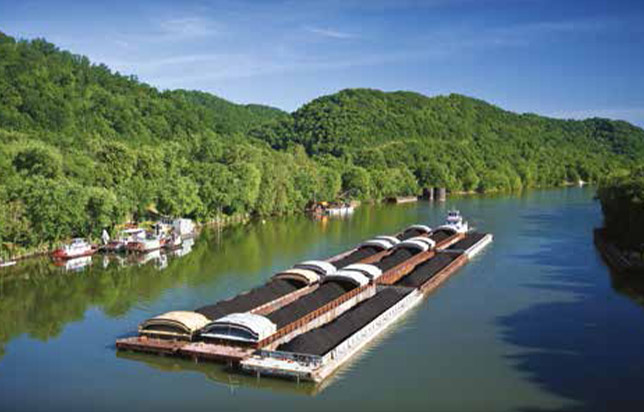
The Great Loop, which is completed by an average of one hundred and fifty people each year, takes about a year. The record for the fastest time to complete the tour is three months. Some Loopers prefer to divide the trip into multiple seasons, doing it in stages and sharing the points of interest they encounter along the way. Everyone’s boat of choice for this experience is different. While there is no such thing as “this is the best boat,” it can be said that there are some boats that are relatively more suitable due to some restricted areas on the route. For example, the lowest bridge in Illinois is just over five meters, so boats with flybridges need to be meticulously measured from the waterline to the navigation antennas. Depth varies, but there are also shallows of one and a half meters. Most of the boats completing the tour are 35-48 feet long. Ten percent of sailboats are also encountered. Some travelers prefer to anchor, and some prefer to dock at piers. There are those who draw their route according to settlements and local businesses, as well as those who prefer to stay in nature and eat on the boat. Due to the long distances between fuel stations in some regions, boats with a range of at least a few hundred miles on a single tank are considered ideal for this job.
The dream of completing the Great Loop has become popular in recent years. Several factors play a role in making the Great Loop so attractive to boaters. Its most important feature is that it offers a safe and comfortable journey despite the long distance that needs to be covered. The fact that it has been done by so few people adds to the challenge, excitement, and bragging rights.
Five favorite stops on the Great Loop
Put-in-Bay on Lake Erie
If the route stretches the entire route of the Erie Canal, then a trip to the islands in the lake is a must. Put-in-Bay on South Bass Island offers the closest atmosphere to the Caribbean that can be found this far north. The island can be explored by renting a golf cart after docking at the municipal marina.
Croton-on-Hudson in Half Moon Bay
Twenty-five miles up the Hudson River for a breathtaking journey through Manhattan, past New York’s famous Statue of Liberty, lies Croton-on- Hudson, an idyllic retreat near history, entertainment, delicious food, and a 97- foot dam that promises a safe harbor.
Green Turtle Bay Resort – Grand Rivers,
This vacation spot between the Kentucky Great Lakes and Florida is ideal for a little pampering. In addition to its pier and tourist facilities, it’s home to the Commonwealth Yacht Club, and the Thirsty Turtle bar has a well-deserved reputation.
Beaufort
This North Carolina community has been a destination for those looking for a taste of life since it was named the “Number One Small Town in the South.” The local Farmer’s Market, two blocks off the main street, also offers unique opportunities to source food. Clawson’s Beaufort Grocery and Blackbeard’s are great options with fresh products.
St. Johns River, Florida
This side route, well worth the extra time and effort, starts in Jacksonville and runs along the 310-mile St. Johns River. There are unique small towns along the river for supplies and food, and the forested landscape, state parks, and wildlife refuges are intertwined with the waterway.