As Italian as Possible
Some parts of the world are more romantic than others. When fine cuisine is added to the primary touristic values such as nature and history, travel changes colors. For example, you don’t have much luck with wine in India or food in Guatemala. It is unclear what you will do once the sun sets and evening falls there. But in Southern Italy, especial- ly if you’re on the west coast of the Amalfi Gulf, the evening schedule doesn’t change. The only question on your mind is where to eat and drink.
Italians call the region “Campania” for short. The most popular gulf in southern Italy. Naples, with its high crime rate and world-famous pickpockets, is the main gateway to this region. Many people who immigrated from African and Maghreb countries live in Italy’s most cosmopolitan metropolis. We cannot say that the usual order and urban discipline of Europe exists here. The fact that the majority of vehicles on the road have dents on their bodies is also an indicator of accident rates. Despite all this, the unique Italiano atmosphere makes everyone feel relaxed, and emphasizes enjoying life rather than taking it too seriously.
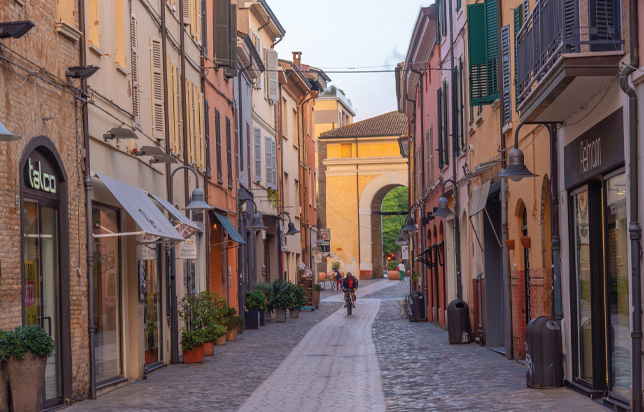
A significant part of a Neapolitan’s life is spent on a Vespa. For them, there’s nothing more important than getting to their destination as soon as possible, throwing the prettiest girl in the back, and feeling the wind on their faces.
As you leave the city and stretch towards the Gulf of Naples, the chaos of Naples gives way to peace, beautiful bays and luxury. Exploring small coastal towns like Positano, Amalfi, Ravenna, and Sorrento, accessible only via narrow mountain roads, sampling the famous spaghetti or pizza napolitana to discover the region’s unique cuisine, and visiting the museum section of the magnificent Capodimonte Royal Palace, which houses a collection of works by artists such as Martini, Massaccio, Panicale, Bellini, Titian, and Botticelli, and getting acquainted with Naples’ Baroque period in San Martino; on top of all this, sitting in a café in the marina and sipping ice-cold limoncello is more than enough to make you say, “I’m so glad I came here.”
Nine kilometers after the first exit towards Salerno, it is also possible to leave the auto-strada and visit the ancient city of Pompeii, which is incredibly beautiful and large. Pompeii, destroyed by Vesuvius in ancient times but today creating an unforgettable landscape alongside the same volcano, captivates even those with no interest in history.
Tomatoes, brought from Peru to the Campania region by traders who discovered America in the 16th century, are a staple of the region’s cuisine. The region has been producing and consuming pasta since the 15th century. The most classic is Rigatoni con Ragu Napoletano (tube-shaped pasta, prosciutto, carrots, garlic, celery and onion). Another important discovery of Neapolitan cuisine is mozzarella. Its origins are also interesting; they date back to India. Italians, who acquired the formula in the 7th century, discovered mozzarella and created a wonderful flavor unlike anything you find fresh in supermarkets. Spiedini di Mozzarella is a mixture with cooked peppers, while Scaloppine Caprese is a mixture with thin meat, tomatoes and garlic. I don’t want to whet your appetite any further, but the same richness continues in the desserts. In short, this region appeals to the palate as much as the eyes.
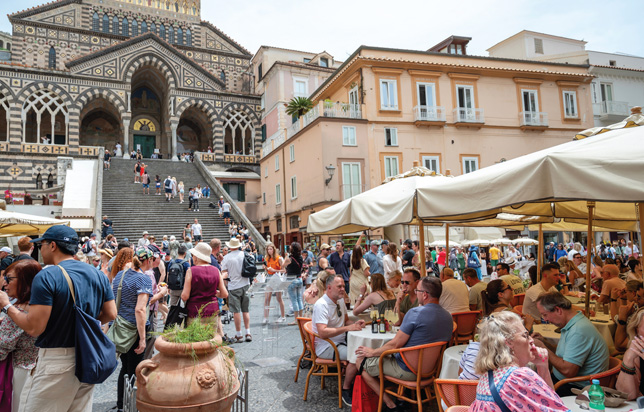
Sorrento, Positano and Amalfi are the three most important settlements on the coastline, which consists of cliffs that drop steeply into the sea. This trio is as rich in legends as it is in the sea views it offers. Even though its features such as silhouettes drawn in the era when ink flowed in rivers, mermaids swimming from the island of Capri, sirens sitting on rocks sipping wine and the meeting point of angels are not convincing, this is the mythological style of expression. After all, even from today’s realistic tourist perspective, there are some very interesting and romantic views.
The Neapolitan Riviera is a master at showcasing almost every element that its name evokes. The Amalfi Bay is approximately fifty kilometers long, but the narrow coastal road and heavy traffic make access difficult until the end of summer. Each bay you leave behind promises you a different shade of blue to encounter in the next bay. The only problem is the slopes that must be crossed to reach the sea. More accurately, returning after reaching the sea can be a bit painful. Because Amalfi and Positano are cities built on steep hills and there is a huge gap between them and the coast.
Cars are not allowed in Positano’s city center. The beach, cathedral, market, restaurants and bars are in this area. The most spectacular and expensive hotels are also here. Palacio Murat is the largest. La Sirena and Il Giardino are examples of villa-hotels unique to this area.
Road transport is not the only option to visit other cities. There are ferry services and boat transportation from the Positano pier to Sorrento, Amalfi and Capri. The biggest problem, especially in Positano, is finding parking. Don’t worry about this in advance, as the hotel you’ll be staying at will arrange this. But consider that you will pay almost as much for parking as for the hotel.
Amalfi, the pearl of these places, is a small town with a population of seventy thousand, but has been an important center of the country’s naval power since the 11th century. That’s why the city museum is so rich and interesting. The cathedral in Duomo Square, the Grotta dello Smeraldo cave accessible only from the sea, and Villa Bizantina outside the city are the first to be seen. St. Michael wine house, located in the historical buildings of the Amalfi market, is an ideal spot to take a breather after these excursions.
When you see Montepertuso, a village seemingly attached to Positano, Praiano a little further south, and Ravenna, which appears as you climb the hill from the Amalfi road, you realise that this region is a true wine country. Because the valley behind the hills that cut steeply into the sea is completely covered with vineyards. Ravenna is a city of art and music. The famous theater here in Villa Ruffalo, with its stage overlooking the bay, is known for inspiring Wagner to write Parsifal. It is also possible that Ravenna’s wines have inspired many artists. Tramonti, Costa d’Amalfi and Furore are wines made entirely from grapes from this region. Irpinia comes from a little further northeast. The names of the important producers are Taurasi, Aglianico, Greco di Tufo, Fiano, Falanghina. The reason the region is known for its wine is the fertile valleys sandwiched between the central part of the Apennine Mountains and Italy’s Adriatic coast. The country’s least populated region, located between Marches and Latiummedium, irrigated by the Tronto rivers from the north and the Trigno rivers from the south, maintains an agriculture-based economy, with viticulture playing a significant role. Greco di Tufo is also one of the grapes unique to this place and it is reflected on the palate from the Feudi di San Gregorio bottles.
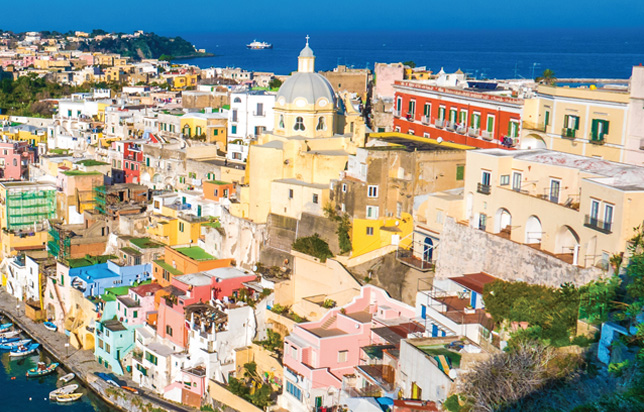
The use of traditional Greek and Roman agricultural methods dating back to ancient times may slow down production, but combined with the ideal climate, the harvest can also produce wonderful results. Small and brave wine producers who resist the conditions imposed by the market continue their work, even if they clash with the industrial structure in the country. In Campania, just as in eating habits, there is an ongoing effort to preserve traditions in winemaking and to resist modern production techniques. As a result, a unique age-like quality emerges in new wines.
The Costiera Amalfitana region, stretching from the Gulf of Naples to the Amalfi Coast, offers a unique blend at sea, thanks to its stock of Europe’s richest marine vessels, ranging from the most luxurious to small family yachts, along with its traditional fishing shelters and Romanesque architectural heritage. While marinas and ports are very busy in July and August, spring and autumn are quieter and offer ideal conditions for yacht tours. Capri, Ischia and Procida, known as the Caprese Islands, and the colorful villages of the Amalfi coast have a maritime tradition dating back centuries. Some marinas focus on ultra-luxury yachts, while others are smaller, family-run businesses. Services are also provided to yachtsmen in fishing villages. Around the Bay of Sorrento, smaller marinas and mooring areas are more common than larger facilities. The prominent marinas by region can be listed as follows:
During the summer months, ports on the Amalfi Coast can be crowded. That’s why it’s important to plan your route and make and confirm your reservation in advance. It is necessary to plan departure and arrival times in advance, especially on weekends and public holidays. Amalfi and the Gulf of Naples mostly experience light breezes and Mediterranean-style sunny days. Many efforts are being made to maintain a clean marine ecosystem in the Campania region. Recycling, water conservation, and waste management are expected to be supported. A 7-10 day itinerary allows you to visit Naples and its surrounding area, Ischia, Sorrento, and the Amalfi coast. It is important not to neglect to be careful in narrow ports and docks.
While all this is happening on the shore, the island of Capri, with its lights twinkling offshore, is another star of the region with its elegant air. Don’t pay attention to the famous song claiming its popularity has died down by saying “Capri, c’est fini”. Capri is another popular destination in itself.
Marina di Napoli
Close to the city center, popular for large capacity and luxury yachts.
Porto di Pozzuoli and neighboring marinas Quieter, affordable accommodation and easy access to central Naples.
Marina di Amalfi
Famous for its historic port, narrow docks and narrow coastal road, it has a more limited capacity but is artistically and visually impressive.
Marina di Salerno
An alterative offering greater capacity and services at the northern end of the Amalfi Coast.
Ischia Port
It is ideal for those seeking natural springs, thermal water and calmer conditions, with small marinas around it.