Art in a historic building: Akademia
The Academy of Mediterranean Countries Foundation brings together artists who produce Mare Nostrum-themed works with art lovers at the Akademia art center opened in Bodrum’s historic courthouse building.
Akademia, Bodrum’s new cultural center with conferences, talks, and exhibitions, organized a series of exhibitions of local artists’ works focused on Mediterranean culture as soon as it opened. The foundation was established in 1994 by a group of entrepreneurs from different Mediterranean countries with the aim of creating an international scientific, educational, and cultural institution, and among many other activities, the foundation organized the world’s first local Habitat Conference. The Academy of Mediterranean Countries Foundation, which has been producing archaeology, history, culture, and art projects since 2001, has also hosted History Conferences with international participants. One of Akademia’s most important projects was to explore the one-and-a-half-kilometer-long city walls of the ancient city of Halicarnassus between 2020 and 2022 and introduce them to cultural tourism.
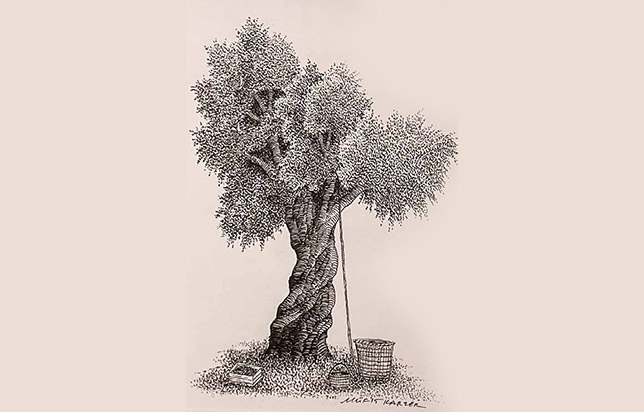
Akademia’s exhibition series for the 2024 summer season started with the painting exhibition of Müfit Karzek, one of Bodrum’s popular artists. The olive tree that lives for centuries and symbolizes eternity, as the favorite of the gods in mythology, the most valuable of gifts, and the symbol of peace, is one of the leading elements of Mediterranean culture. Müfit Karzek has been drawing olive trees with his unique technique for years. “I thought that the olive tree had a face, and I searched for the faces of trees for many years. One afternoon at sunset, I saw the tree looking at the sun, and I realized that the olive tree was following the sun by turning and twisting like a Mevlevi dervish. Thinking that it was the olive tree that best describes described the rotation of the Earth and the planets, I followed it.” Karzek still continues to follow the olive tree.
Akademia’s second exhibition was dedicated to Sedat Nacar’s paintings and sculptures. “The artist produces his work. The interpretation of the resulting work should be a personal reckoning of an inner journey in line with the viewer’s own perception and opinion.” The artist included the materials he collected from nature in this exhibition and gave them new meanings. Nacar, who transforms materials characterized as waste into art, draws attention to nature, environmental awareness, and the importance of recycling.